From the battlefields of France to the burning decks of the Pacific, Catholic servicemen and chaplains embodied the courage, sacrifice, and patriotism honored by the Church for centuries.
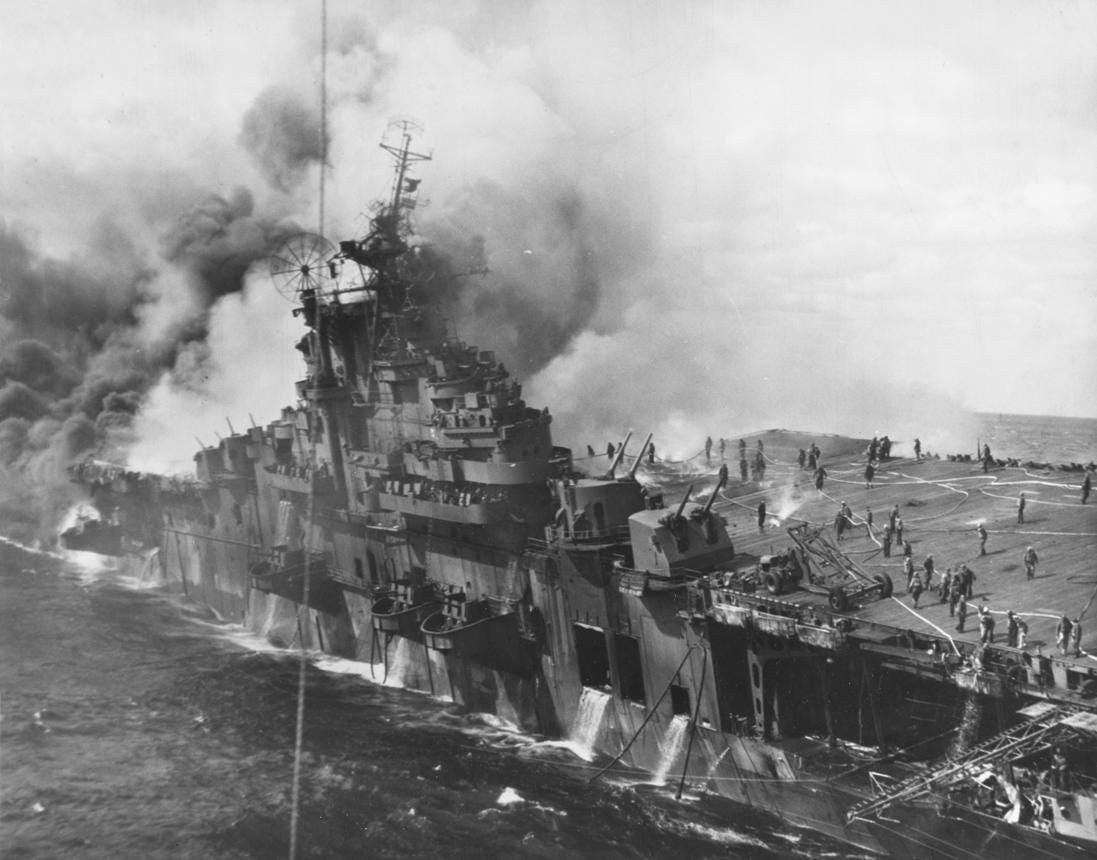
On March 19, 1945, the American aircraft carrier USS Franklin was operating off the Japanese coast when an enemy aircraft struck the ship with bombs. Explosions ripped through the flight deck. Fueled aircraft caught fire, ammunition detonated, and burning wreckage trapped sailors throughout the vessel. Men struggled to escape the flames while others fought desperately to keep their ship afloat.
Hiraeth In Exile is a reader-supported publication. To receive new posts and support my work, consider becoming a paid subscriber.
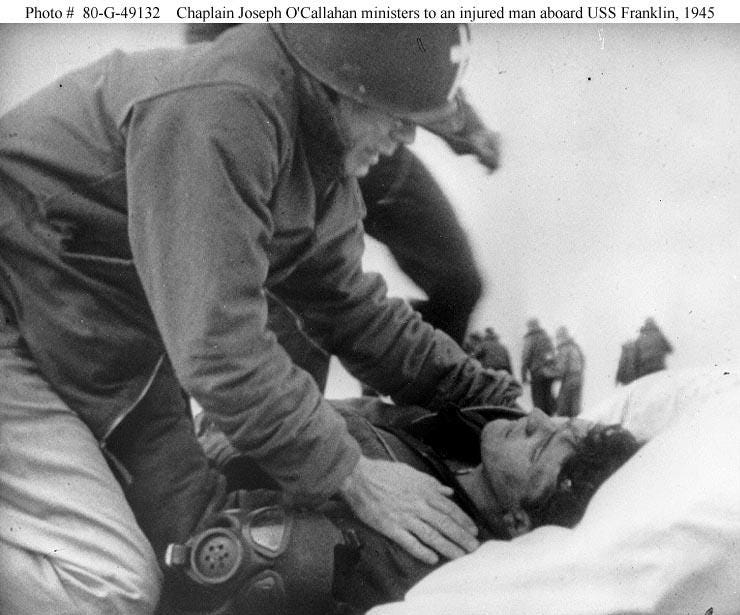
Lieutenant Commander Joseph Timothy O’Callahan, a Jesuit priest serving as the ship’s Catholic chaplain, was among the wounded.
He continued working.
Moving through smoke-filled passageways onto the flight deck, Father O’Callahan ministered to the dying, administered the sacraments, organized firefighting parties, and directed sailors in disposing of live ammunition before it could explode. According to his official Medal of Honor citation, he personally manned a hose to cool armed bombs rolling dangerously across the listing deck.
There is an extraordinary photograph from that day. Father O’Callahan, wearing his Navy uniform, bends over an injured sailor to administer the last rites. Around them lies the wreckage of a warship that had nearly become a floating tomb.
The sailor, reportedly Robert C. Blanchard, survived.
USS Franklin ablaze and listing after the Japanese attack on March 19, 1945.
So did the Franklin, although hundreds of her crew did not. For his extraordinary courage, Father O’Callahan received the Medal of Honor from President Harry Truman on January 23, 1946, becoming the first Navy chaplain to receive that decoration.
A Catholic priest had risked his life to save American sailors aboard a burning warship. He fulfilled his military duties while exercising the sacred responsibilities of his priesthood. There was no contradiction between those obligations. His faith supplied the courage that made his service so remarkable.
On this Veterans Day, we should remember men like Father O’Callahan, along with the millions of Americans whose military service was performed far from the attention of historians, photographers, or presidents.
And we should remember how the Catholic Church traditionally understood their vocation.
What America’s Bishops Said Before Vatican II
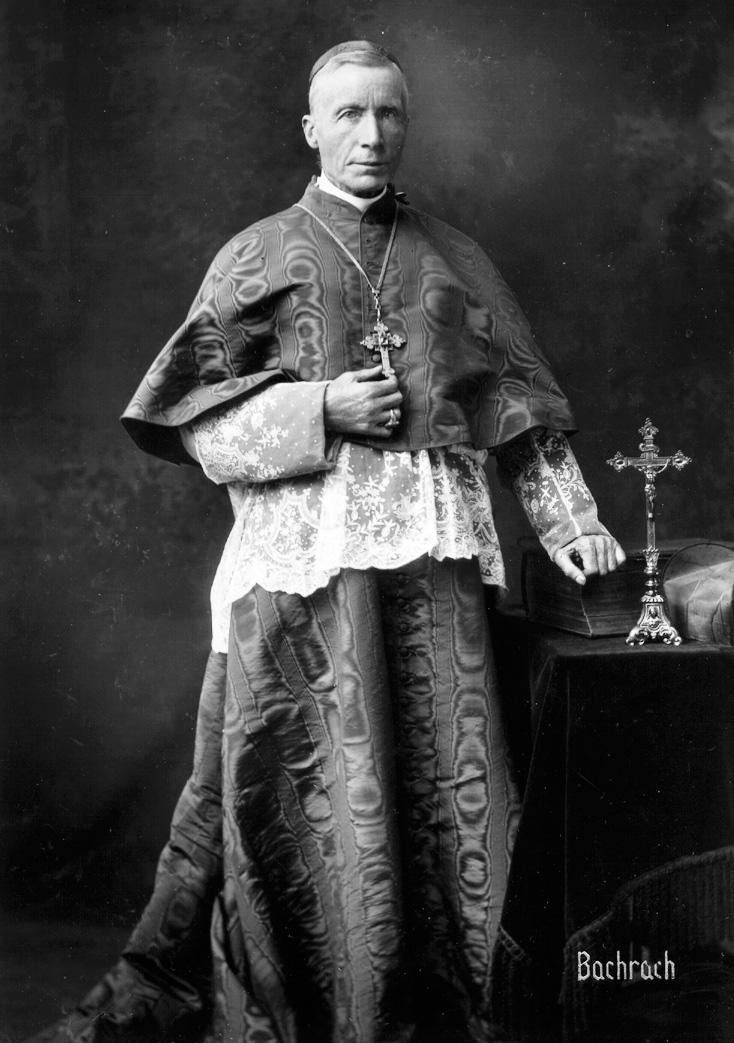
Cardinal James Gibbons of Baltimore, who headed the American hierarchy when the bishops issued their 1919 pastoral letter praising Catholic servicemen.
The armistice ending the fighting of the First World War took effect at eleven o’clock on November 11, 1918. The anniversary became Armistice Day, a commemoration of the dead and a prayer that such slaughter might never return. After another world war and the Korean conflict, Congress expanded the observance in 1954 into Veterans Day, honoring Americans who had served in the armed forces.
The Catholic Church in America had long participated in such commemorations, and its bishops were remarkably forthright about the virtue of patriotism.
On September 26, 1919, less than a year after the armistice, the American hierarchy issued a pastoral letter under Cardinal James Gibbons of Baltimore. The bishops surveyed the terrible conflict, the service of American Catholics, and the moral responsibilities facing the nation after the war.
Their judgment was unmistakable:
“The traditional patriotism of our Catholic people has been amply demonstrated in the day of their country’s trial.”
The bishops praised the courage of Catholic servicemen, the sacrifices made by their families, and the extraordinary work of military chaplains. They recalled the Third Plenary Council of Baltimore’s earlier expression of gratitude for America’s independence and for those who had secured its liberties.
Those words deserve particular attention because they were written by the American Catholic hierarchy well before Vatican II.
These bishops knew the encyclicals of Leo XIII. They understood the Church’s exclusive possession of divine revelation and its condemnation of religious indifferentism. They had no difficulty recognizing the rightful obligations Catholics owed their country.
Their 1919 pastoral letter also condemned the terrible moral evils accompanying war. The bishops mourned the destruction, suffering, and sins committed during the conflict, while expressing genuine gratitude for those who had served.
The Catholic University of America displayed the same spirit.
On March 28, 1917, Bishop Thomas J. Shahan, the university’s rector, wrote to President Woodrow Wilson pledging the institution’s cooperation during the national emergency. Military training was subsequently organized on campus, and nearly four hundred students entered the Student Army Training Corps in 1918.
The American bishops established the National Catholic War Council to coordinate assistance for servicemen, war workers, and their families. Directed by Paulist Father John J. Burke, its motto was “For God and Country.”
One of the American Navy’s most prominent wartime leaders, Admiral William Shepherd Benson, was Catholic. As the first Chief of Naval Operations, he helped direct American naval operations during the war. In 1920, Cardinal Gibbons presented him with the Order of St. Gregory the Great on behalf of Pope Benedict XV.
The Church also honored veterans through the Holy Sacrifice of the Mass.
On November 11, 1931, Father Francis J. Hurney, a Navy veteran and American Legion chaplain, celebrated a solemn High Mass at the Church of the Immaculate Conception in Washington, D.C. In his sermon, he urged nations to pursue peace through Christian justice and charity, lest another generation endure the suffering of the Great War.
Four years later, Catholic War Veterans gathered at St. Patrick’s Cathedral in New York for a Requiem Mass on Armistice Day. Father Aloysius C. Dineen, chaplain of the 27th Division, preached on St. Joan of Arc and the importance of listening to God’s voice.
The soldiers were honored, the dead remembered, and the faithful directed toward God.
It was an entirely natural expression of Catholic life in America.
Patriotism Is a Catholic Virtue
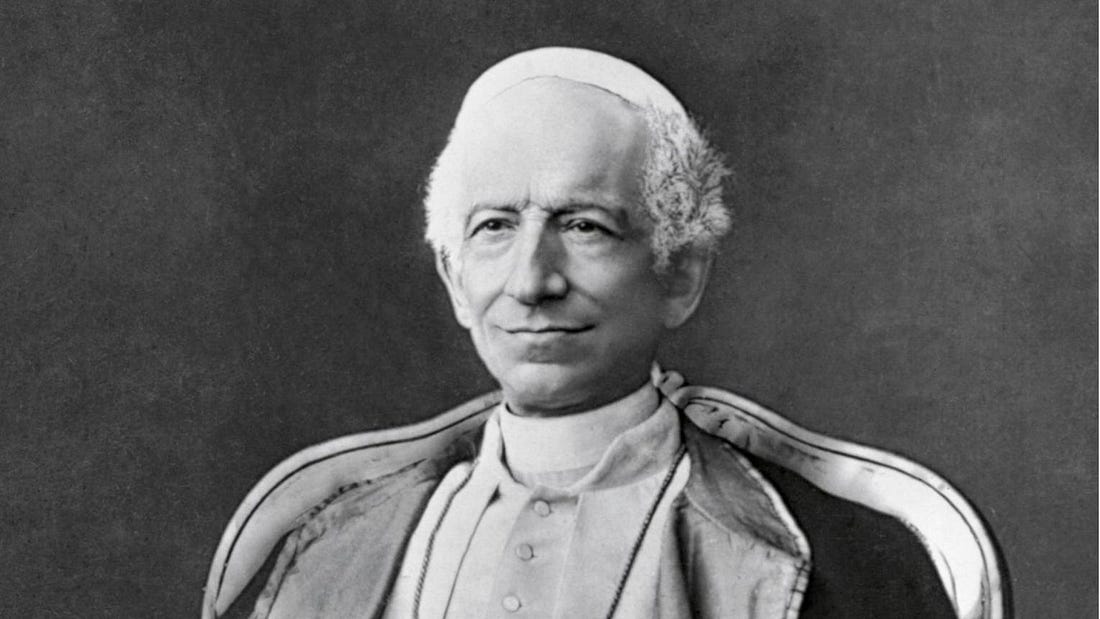
Pope Leo XIII, whose encyclical Sapientiae Christianae establishes the natural-law obligation to love and defend one’s country.
The theological foundation of patriotism reaches considerably further back than the American Republic.
St. Thomas Aquinas places our duties toward our parents and country under the virtue of piety, a virtue related to justice. In the Summa Theologiae, II-II, question 101, he explains that man owes particular gratitude and service to those from whom he has received life, upbringing, and the benefits of membership in a community.
A country provides an inheritance that no individual creates by himself. Its language, customs, institutions, and common life are received from generations of men and women who lived and labored before us.
That inheritance establishes moral obligations.
Patriotism, properly understood, is the virtue by which we acknowledge those obligations through love, gratitude, service, and legitimate sacrifice for our homeland.
Pope Leo XIII explained the matter with particular clarity in his 1890 encyclical Sapientiae Christianae.
In paragraph five, he taught that natural law obliges us to love and defend our native country, even at the risk of death. He immediately added that Christians possess a still greater obligation to love the Church, from which they receive the supernatural life of the soul.
That ordering is essential.
Our first allegiance belongs to Almighty God and His Church. Our duties to family and country follow within the moral order established by Him.
Leo XIII consequently recognized the legitimate love of one’s homeland while insisting that no earthly government possesses authority to command what God forbids.
Indeed, he wrote in paragraph seven:
“No better citizen is there, whether in time of peace or war, than the Christian who is mindful of his duty.”
These words deserve a permanent place in Catholic discussions of patriotism.
The traditional Church recognized both the dignity of national service and the limits imposed upon earthly authority by the divine law. A Catholic soldier could love his country with genuine devotion while remaining bound to refuse an intrinsically immoral command.
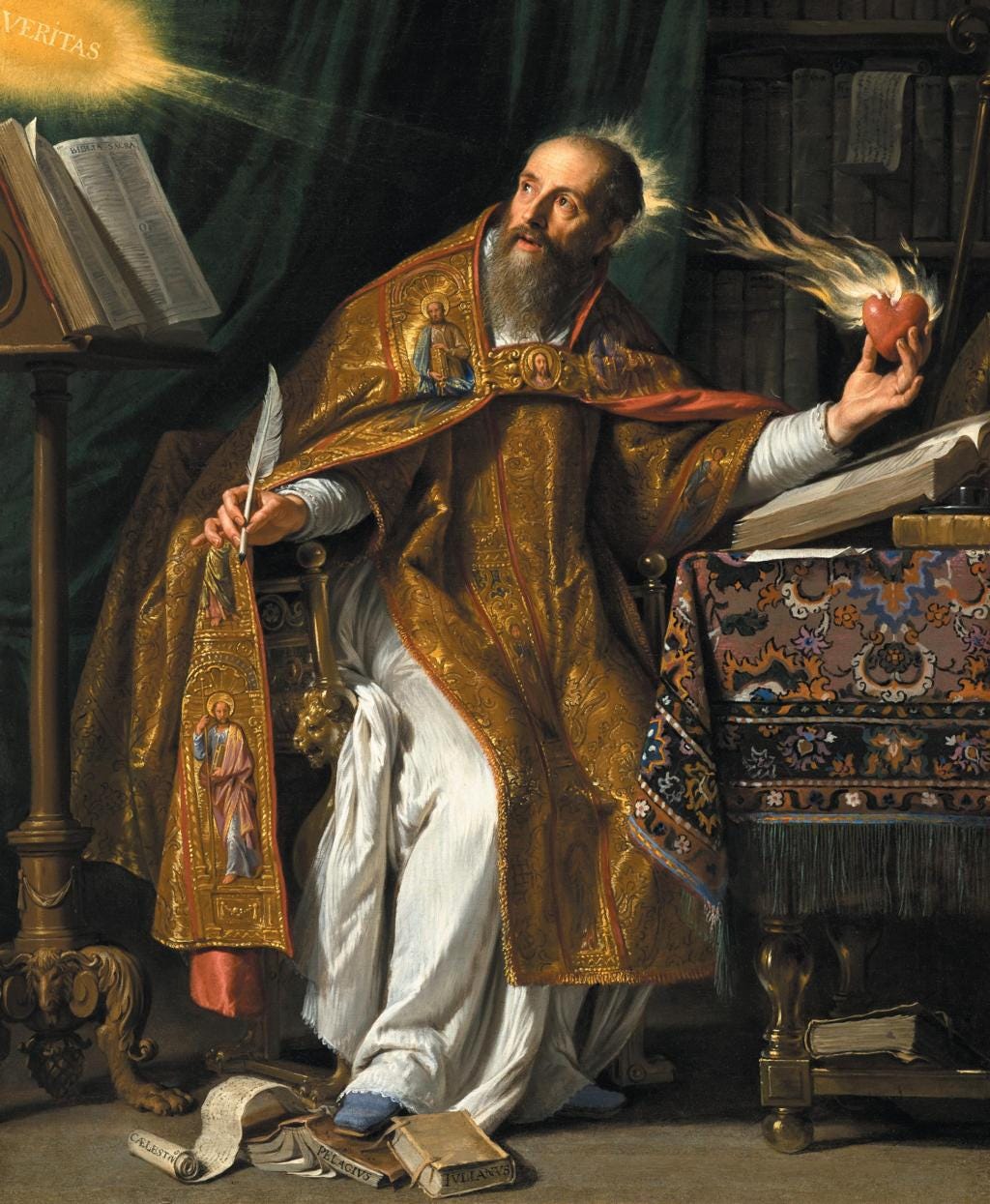
St. Augustine, portrayed by Philippe de Champaigne in the seventeenth century. Augustine’s letter to the Roman commander Boniface provides the principal historical teaching discussed in this section.
Around the year 418, St. Augustine wrote a letter to Boniface, a Roman military commander who sought spiritual guidance.
The great bishop assured him:
“Do not think that it is impossible for any one to please God while engaged in active military service.”
Augustine recalled the centurion praised by Our Lord, the conversion of Cornelius in the Acts of the Apostles, and the soldiers who approached St. John the Baptist asking what they ought to do.
The Baptist instructed them to refrain from extortion and violence against the innocent and to remain content with their wages. He did not command them to abandon the military profession.
Augustine urged Boniface to seek peace, exercise mercy, and uphold justice even in dealing with enemies. War could be morally permissible, but its purpose had to remain subordinate to the restoration of a just peace.
St. Thomas Aquinas later developed the traditional conditions of a just war in the Summa Theologiae, II-II, question 40: legitimate authority, a just cause, and a right intention.
These principles establish the moral legitimacy of military service while placing moral limits upon the use of force.
The responsibility for deciding whether a nation should wage war rests principally with its legitimate rulers, rather than individual soldiers. Soldiers are ordinarily bound to obey lawful military orders, although no authority can oblige them to commit manifestly immoral acts, such as the deliberate killing of innocent civilians or prisoners.
Within these limits, military service offers opportunities to practice exceptional virtues. Courage is the most obvious, although courage alone is insufficient. Soldiers must also exercise temperance, justice, prudence, and fidelity to their lawful duties.
Anyone who has served knows that military life frequently involves tedious responsibilities and unglamorous sacrifices. Long deployments, separation from family, uncomfortable conditions, exhausting watches, and endless training rarely produce heroic photographs.
Such duties nevertheless help preserve the security of a country and the lives of its people.
Military service is honorable because its proper purpose is honorable: the legitimate defense of the community and the preservation of a just peace.
The Priests Who Went to War
Father Francis P. Duffy, the celebrated Catholic chaplain of New York’s Fighting 69th during World War I.
Father Francis P. Duffy, chaplain of New York’s famous Fighting 69th Infantry, offers one of the finest American examples.
Born in Canada, Duffy became a priest in New York and accompanied his regiment to France during the First World War. There he experienced the terrible fighting of the Western Front, including the battles of the Ourcq and Meuse-Argonne.
He celebrated Mass, heard confessions, comforted frightened soldiers, and administered the last rites to men whose lives were ending in the mud of France.
The soldiers loved him.
Duffy’s memoir, Father Duffy’s Story, published in 1919 and now available in the public domain, preserves the experiences of the regiment with extraordinary affection. Its pages contain humor, affection for the men, accounts of suffering, and the grief of a priest who had buried far too many young soldiers.
He was awarded the Distinguished Service Cross and Distinguished Service Medal for his wartime service.
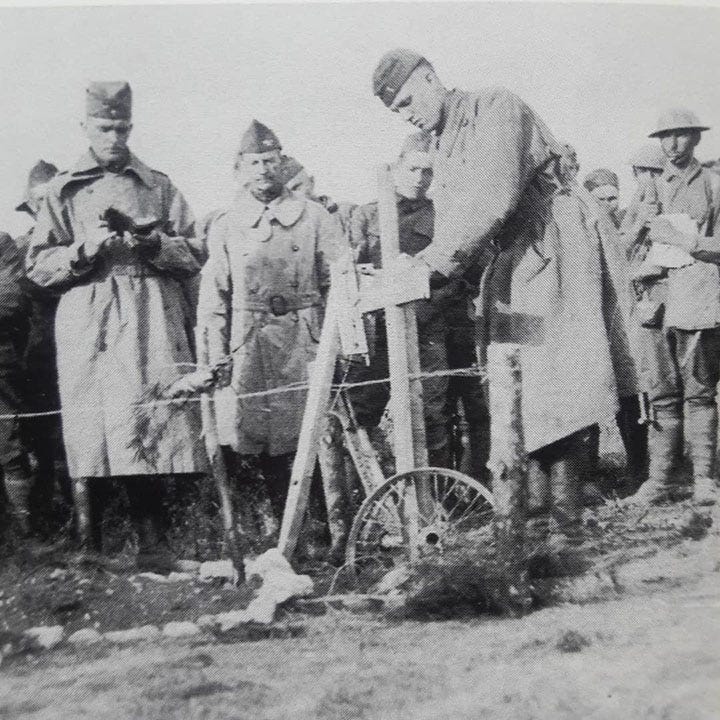
Chamrey, France - New York National Guard Chaplain (Cpt.) Father Francis P. Duffy, the chaplain of New York’s famed “Fighting 69th,” reads a service as a cross is placed on the grave of Lt. Quentin Roosevelt in August 1918. Duffy’s commander, Col. Robert McCoy, had been an aide to President Theodore Roosevelt and knew Quentin.
The men of the Fighting 69th had come from a world of ordinary occupations, family obligations, and parish life. Military service brought them into circumstances of almost unimaginable danger. Their chaplain accompanied them because their spiritual welfare remained important even amid the violence of modern warfare.
During the Second World War, Pius XII expressed similar sentiments when he received American military chaplains in Rome on June 30, 1944.
The Allied landings in Normandy had occurred only weeks earlier. Across Europe, American servicemen were engaged in a costly struggle that would continue for another eleven months.
Addressing the chaplains, the pope praised the priests who had left their ordinary assignments to minister to souls exposed to the dangers of combat and the temptations of military life.
He urged them to win the hearts of their men through holiness, personal integrity, and selfless devotion to their spiritual welfare.
He described their work as a “magnificent apostolate.”
The old Church understood the importance of the military chaplain. When young men were sent into situations where death could arrive without warning, the need for confession, Holy Communion, spiritual counsel, and the last rites became especially urgent.
No priest could abolish the danger of battle. He could, however, bring the consolations of Christ to those required to face it.
Father Kapaun Stayed Behind
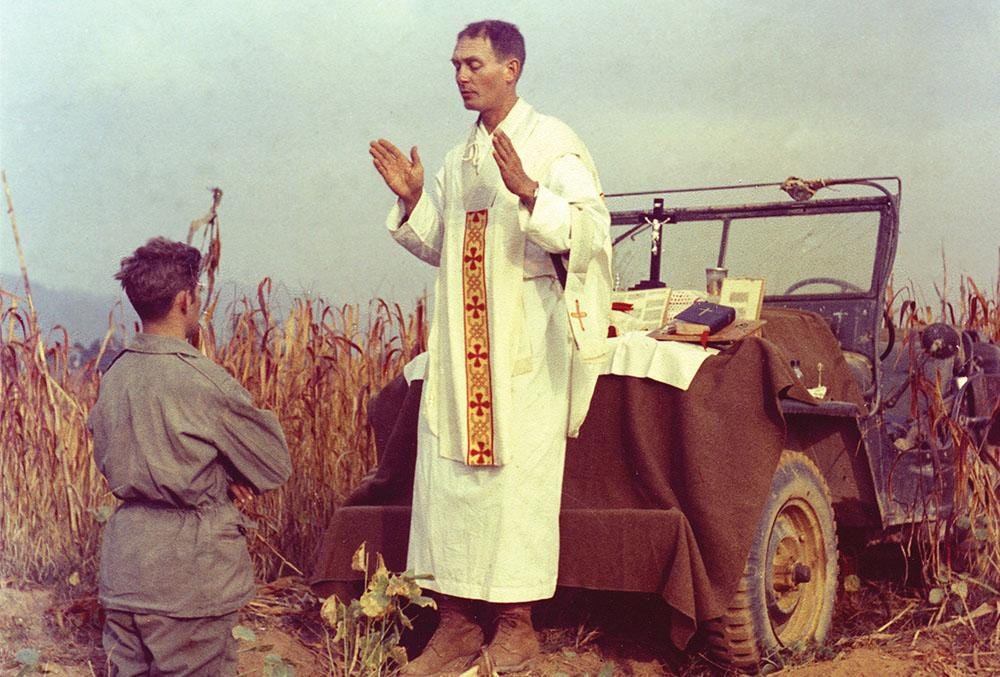
Father Emil Kapaun celebrating Holy Mass using a military jeep as his altar in Korea on October 7, 1950, less than a month before his capture.
Another American Catholic chaplain provided an extraordinary example during the Korean War.
Father Emil Kapaun, a priest from Kansas serving with the First Cavalry Division, repeatedly exposed himself to enemy fire while tending the wounded.
During the Battle of Unsan in November 1950, American positions were overrun by Communist forces. Kapaun had opportunities to withdraw but remained with soldiers who could no longer escape.
He was captured on November 2.
His captors subsequently marched him and other American prisoners to camps where inadequate food, disease, brutal conditions, and exposure threatened their lives.
Kapaun did everything within his power to help.
He scavenged for food, tended the sick, washed clothing, and improvised ways to purify drinking water. He continued praying with the men and ministering to their spiritual needs, despite the danger of punishment.
His fellow prisoners later credited him with helping save many lives.
On May 23, 1951, Father Kapaun died in captivity.
He received the Medal of Honor posthumously in 2013. The United States Army’s account records his conduct and includes testimony concerning the extraordinary influence he exercised upon the men imprisoned with him.
What remains so moving about Kapaun is his refusal to abandon those who depended upon him.
His military service placed him among men who were exhausted, wounded, terrified, and facing the possibility of death. His priesthood supplied the grace and spiritual purpose with which he responded.
Even in captivity, deprived of almost everything, Father Kapaun continued to serve his men.
Courage Knows No National Boundary
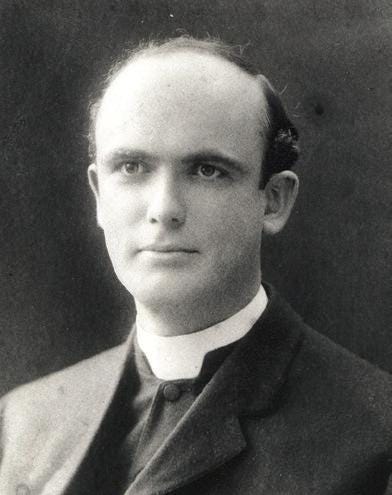
Father Willie Doyle, S.J., photographed in his British Army chaplain’s uniform during World War I. He was killed while attempting to assist wounded soldiers in August 1917.
Veterans Day is an American observance, and our gratitude naturally begins with those who served the United States. But the virtues exercised in honorable military service can be found among the people of other nations as well.
The history of Catholic military chaplains provides some remarkable examples.
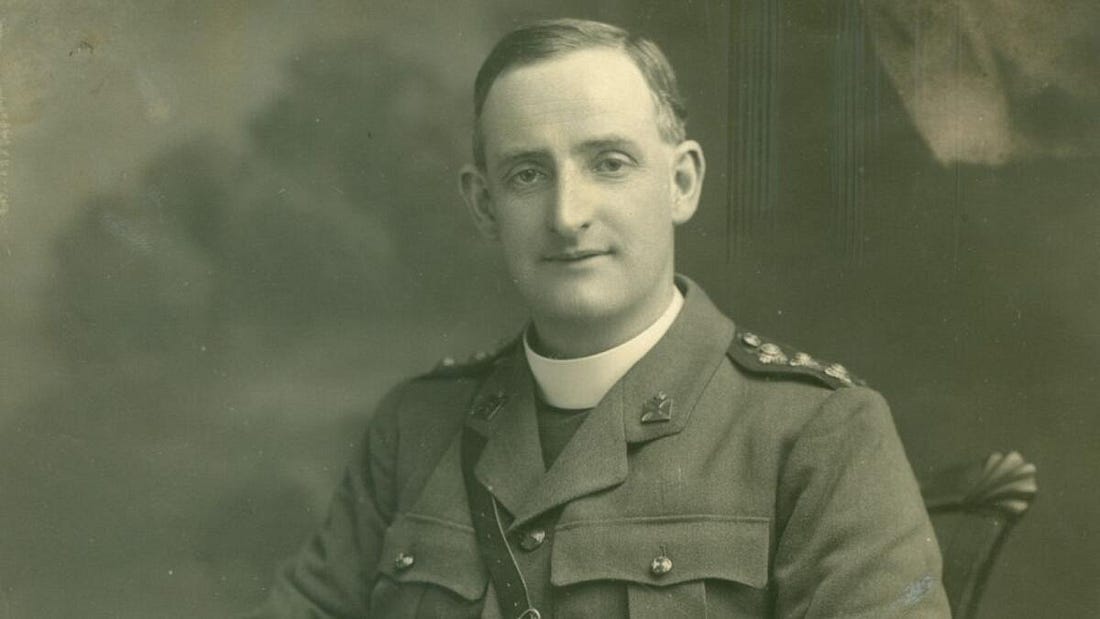
Father Willie Doyle was an Irish Jesuit who volunteered to serve with the British Army during the First World War.
He accompanied soldiers through the horrors of the Western Front, hearing confessions and ministering to the wounded amid artillery bombardments and machine-gun fire.
He received the Military Cross for bravery.
On August 16, 1917, during the Third Battle of Ypres, Father Doyle went to the assistance of wounded soldiers under enemy fire. He was killed by a shell.
His body was never recovered.
The officers and soldiers who knew him remembered his cheerfulness, courage, and extraordinary devotion. His concern extended to men of other religious backgrounds and even to enemy prisoners who needed assistance.
Across the battlefield stood another Jesuit military chaplain, Father Rupert Mayer, who served with the German Army.
Mayer accompanied soldiers in France, Poland, and Romania during the same terrible conflict. He celebrated Mass, heard confessions, attended the wounded, and repeatedly placed himself in danger to rescue men from the battlefield.
In December 1916, he suffered wounds so severe that his left leg had to be amputated.
His later life was equally remarkable.
After the war, Father Mayer ministered among the poor in Munich and became an outspoken opponent of National Socialism. He publicly resisted Hitler’s ideology and suffered imprisonment, including confinement in the Sachsenhausen concentration camp.
There is something worth contemplating in the lives of these two priests.
Father Doyle served soldiers fighting under the British flag. Father Mayer ministered to men wearing the uniform of Imperial Germany. Their countries were at war, yet both priests performed acts of remarkable courage and charity on behalf of the wounded and dying.
Each ministered to souls for whom Christ had shed His Precious Blood.
The national loyalties of their soldiers were different. Their priestly obligation to bring the sacraments to men in danger of death was the same.
We can honor such examples without declaring every cause for which nations have gone to war equally just. The Church’s moral judgment of particular wars remains necessary. So does recognition of the virtues displayed by individual servicemen.
What Veterans Day Asks of Us
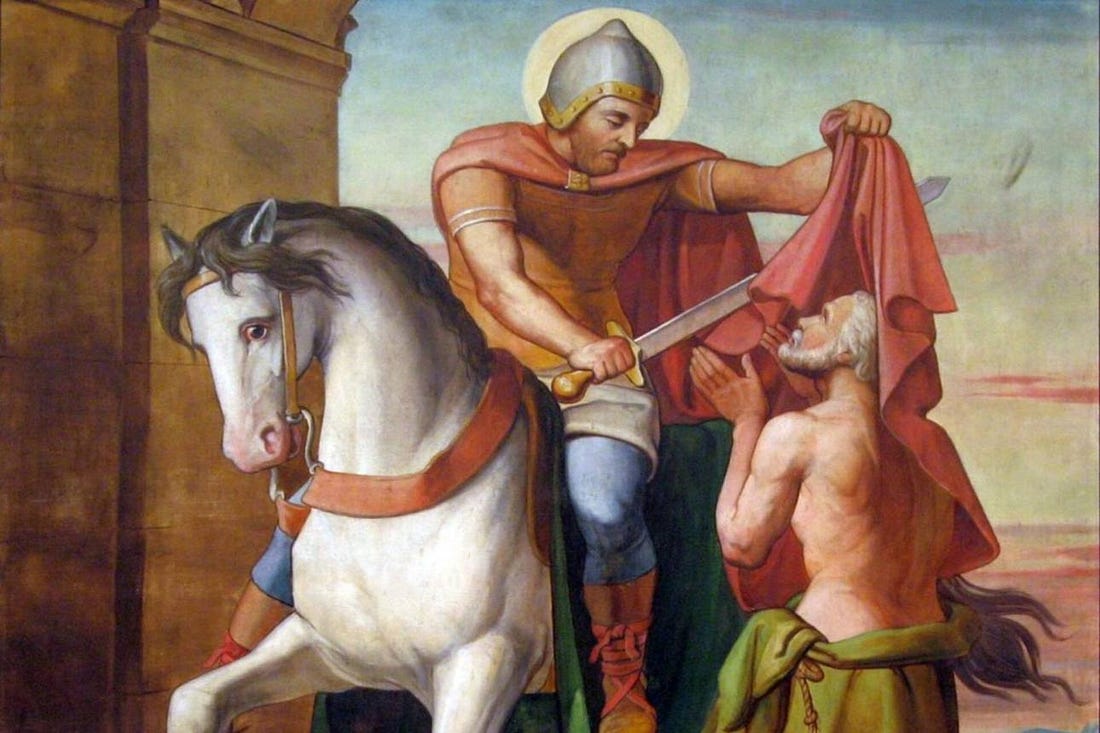
St. Martin and the Beggar
November 11 also happens to be the feast of St. Martin of Tours in the traditional Roman calendar.
Martin served as a Roman soldier before embracing the monastic life and eventually becoming one of the great bishops of the Church. His famous act of charity, dividing his military cloak with a beggar, remains among the best-known episodes of early Christian history.
The young soldier recognized Christ in a man suffering from the cold.
It is a fitting image for Veterans Day.
Americans sometimes confuse Veterans Day with Memorial Day. The distinction is worth preserving.
Memorial Day is specifically dedicated to those who died in military service. Veterans Day honors all who have served, including the millions of living veterans whose names will never appear on a monument or in a military history.
Today our gratitude belongs to those who served in the Army, Navy, Marine Corps, Air Force, Coast Guard, and Space Force, along with those who wore the uniforms of earlier generations.
It belongs to combat veterans and those whose service unfolded far from a battlefield. To sailors standing lonely watches at sea, aircraft maintainers working through the night, hospital corpsmen caring for the wounded, and the countless men and women whose ordinary duties contributed to the defense of their country.
Some veterans returned home with permanent injuries. Others experienced years of separation from their wives, husbands, and children. Many performed their duties quietly and returned to civilian life without expecting special recognition.
We owe them more than a brief expression of gratitude.
The obligations of justice and charity extend to ensuring that veterans receive proper medical care, assistance with disabilities, and the benefits promised to them for their service. Those who suffered lasting injuries in the performance of their duties have a particular claim upon the nation they served.
Families deserve remembrance as well. Military service frequently demands sacrifices from those who never wore a uniform.
And for our veterans who have died, the Catholic Church possesses a gift more precious than any ceremonial salute.
We can offer the Holy Sacrifice of the Mass for the repose of their souls.
We can pray for those who died on distant battlefields, those who survived the war but carried its wounds into old age, and those whose final hours were attended by a military chaplain like Father O’Callahan or Father Kapaun.
There is something profoundly Catholic in the image of a priest kneeling beside a wounded sailor aboard a burning ship. Amid the destruction, the Church was present, caring for a single soul while brave men struggled to save the lives of their shipmates.
The sailor in that photograph survived. Father O’Callahan lived to receive his nation’s highest military decoration. Hundreds of their shipmates never returned home.
Today we remember them all, with particular gratitude for the veterans still among us.
May Almighty God bless those who have served their countries honorably, comfort those who carry the burdens of war, strengthen those who continue to serve, and grant eternal rest to the faithful departed.
Requiem aeternam dona eis, Domine, et lux perpetua luceat eis.
Eternal rest grant unto them, O Lord, and let perpetual light shine upon them.
If you value independent Catholic analysis and want to help keep this work going, you can make a one-time contribution below. Every donation directly supports the writing, research, and production of Hiraeth in Exile.


No comments:
Post a Comment
Thank you for your comment.